A little thought,
shared.
These thoughts are different perspectives, reflections that help us and others move forward.
Communication

Am I communicating?
The question most people forget to ask — and why asking it changes everything about how you approach a conversation.

Communicate clearly … tick.
"The single biggest problem in communication is the illusion that it has taken place." Clarity is the beginning, not the end.

Shut up street or value lane?
I often think of communication like a network of roads. There are lots of different ways of getting to your destination.

You did what?
We rarely give people the benefit of the doubt, instead we're quick to assume the worst. What should we do when it's not what we expected?

Content or context?
A great communicator is able to do two things simultaneously — deliver the content of a conversation and cultivate the context that shapes how it lands.
Emotional Intelligence

Why do we have emotions?
If emotions are so tumultuous, it begs the question — what good are they? Answer: because they move us.

What is emotional intelligence?
"Have feeling must act" seems to be my children's motto. There is a balance here — let's explore the extremes.

What are the pitfalls of feeling?
Emotional awareness is valuable. Emotional reactivity is dangerous. On knowing the difference.
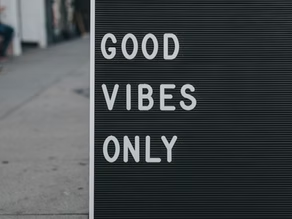
Is this feeling good or bad?
The binary we use to evaluate our emotions might be the very thing stopping us from using them well.
Strategy

Strategy is … Apple Maps
If strategy is a plan, over time, which gets you from A to B, maps provide a great analogy for how to consider and deliver a strategy.

Five steps to anywhere
On holiday in a new destination looking for a place to visit? We all follow the same five steps — why not adopt them for life?
Relationships

Connection is critical
Relationships are valuable. We can't treat them like we do our possessions — we need to value them, not just what they give us.

It's a complex world
The desire to simplify life is inbuilt, but leaves us oversimplifying and harming relationships. We need to allow the world its complexity.

Perfect isn't possible
Approaching relationships with the idea that they will be perfect means we're setting ourselves up for failure. Humility and grace needed.

Giving up control
What should we expect out of a relationship? To answer that we need to understand what we can actually influence, rather than just fret over.

Let's think differently
Thinking differently is great. This is about relationships which don't die in their differences, but rather thrive in rich diversity.
Thinking & Complexity
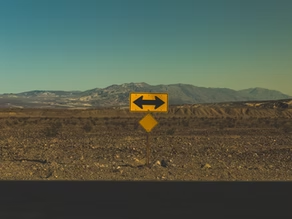
Dichotomies: left or right?
What is a dichotomy? It's best seen through how hungry children are — it's either all fine, or the wheels have come off.

Spectrums: where are hue?
Moving from either/or to a more honest picture of where we actually sit on any given question.

Tensions: learning to walk
Some problems aren't meant to be solved. They're meant to be held, navigated, and lived with.
Stories & Reflection

Up is good, and down is bad.
That's how we're conditioned, isn't it. When numbers are 'up and to the right' then things are good. But when they're going down, that's bad.

Unresolved Stories
Our best life is not the thing we get to do once we've resolved all our problems — it's the life we live on our way there.

My Life's Passport
Our experiences and what we take from them shape our ability to make the most of opportunities in front of us.
Jaimie's Research
Connect on LinkedIn →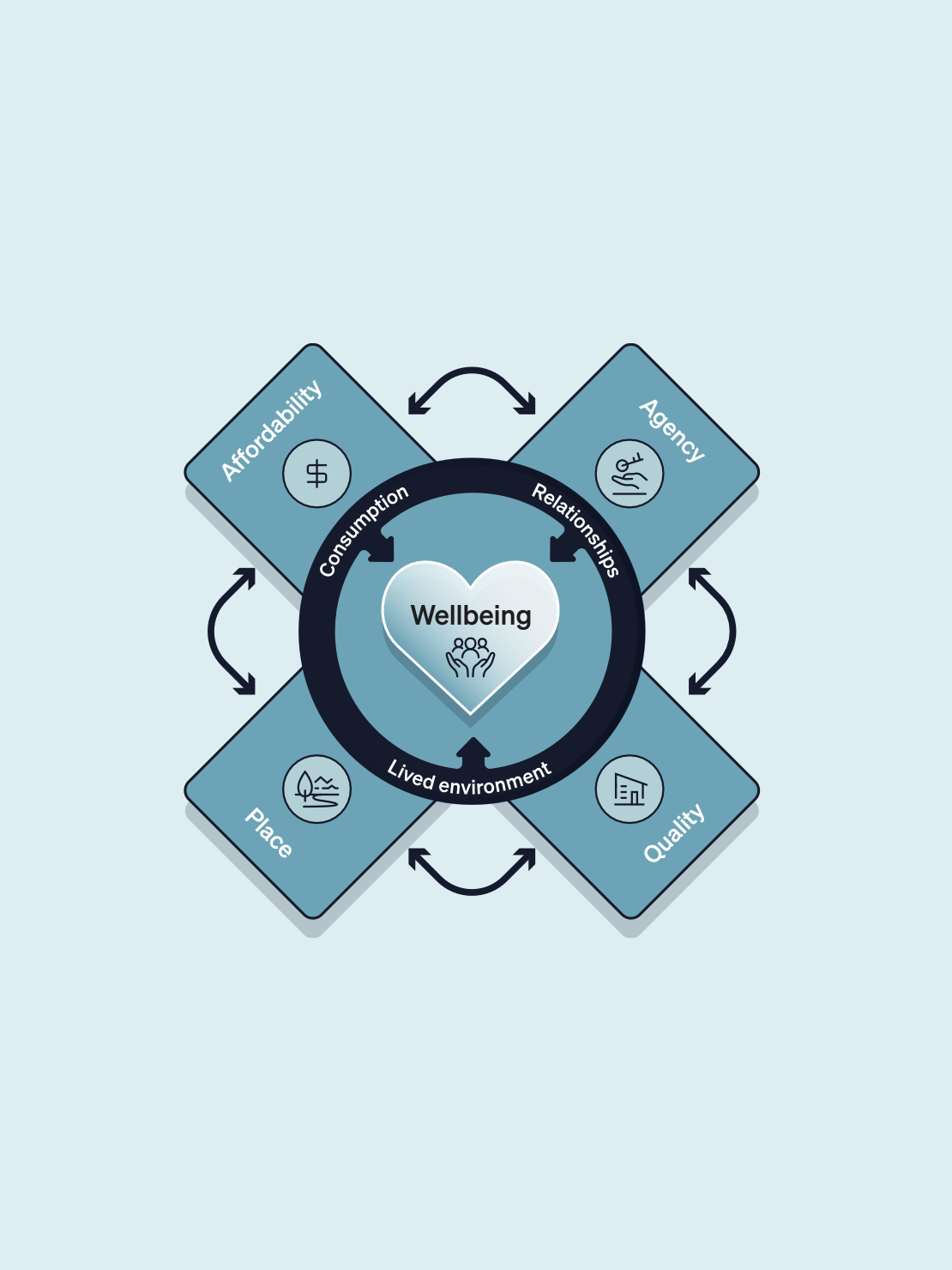
A map of the housing system in Aotearoa New Zealand
A plain-language systems model to bring visibility to the connections and trade-offs that make New Zealand's housing policies complicated.
Jaimie's housing systems work draws on longitudinal datasets — including Growing Up in New Zealand — to examine how housing, income, and family circumstances shape children's development and long-term wellbeing. Her research has informed national policy conversations at the highest levels of government.
As a Fellow at Motu Economic and Public Policy Research and Postdoctoral Fellow at the University of Canterbury, she bridges academic rigour and practical policy impact. In 2023, she was awarded the Jan Whitwell Prize for Doctoral Research by the New Zealand Association of Economists.
Strength-based Coaching
This self-paced online course is for leaders and coaches who want to bring a strengths lens to the way they develop people. Hosted on Thinkific, it can be started at any time.
The course draws on CliftonStrengths and positive psychology frameworks to help you identify, name, and develop the unique talents of the people you lead — including yourself.
Go to the course →